

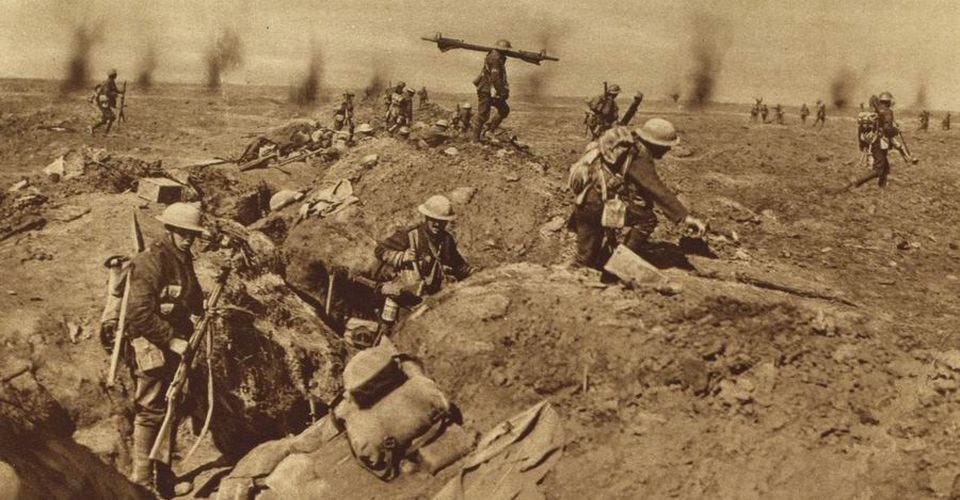
So, soon they topped the hill, and raced together
Over an open stretch of herb and heather
Exposed. And instantly the whole sky burned
With fury against them; and soft sudden cups
Opened in thousands for their blood; and the green slopes
Chasmed and steepened sheer to infinite space.
Wilfred Owen
Truth is, when we rolled into Kilometre Zero, I didn’t actually realise this was where the killing began. I thought it was some side show that we were looking at before we went to the real thing.
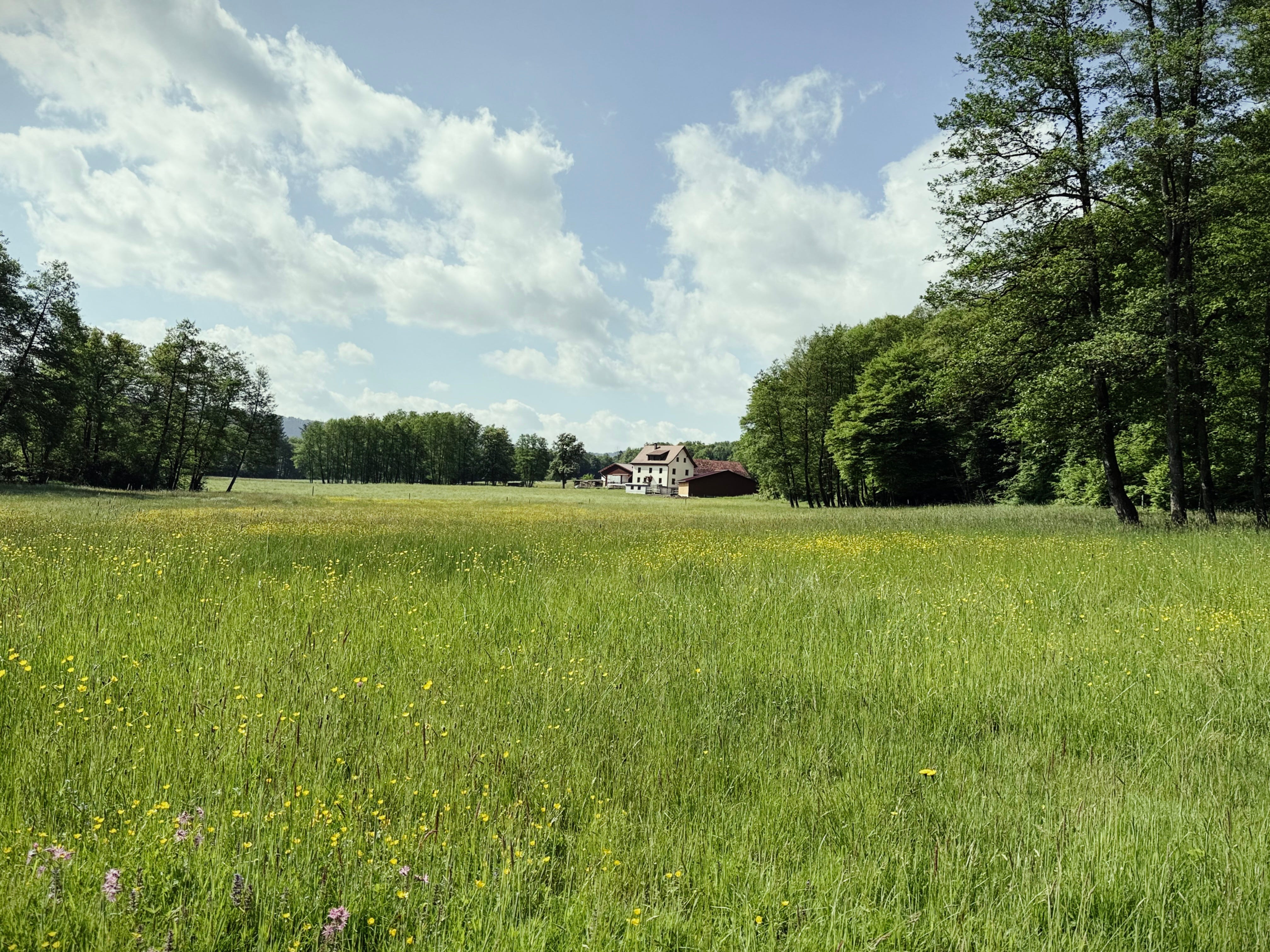
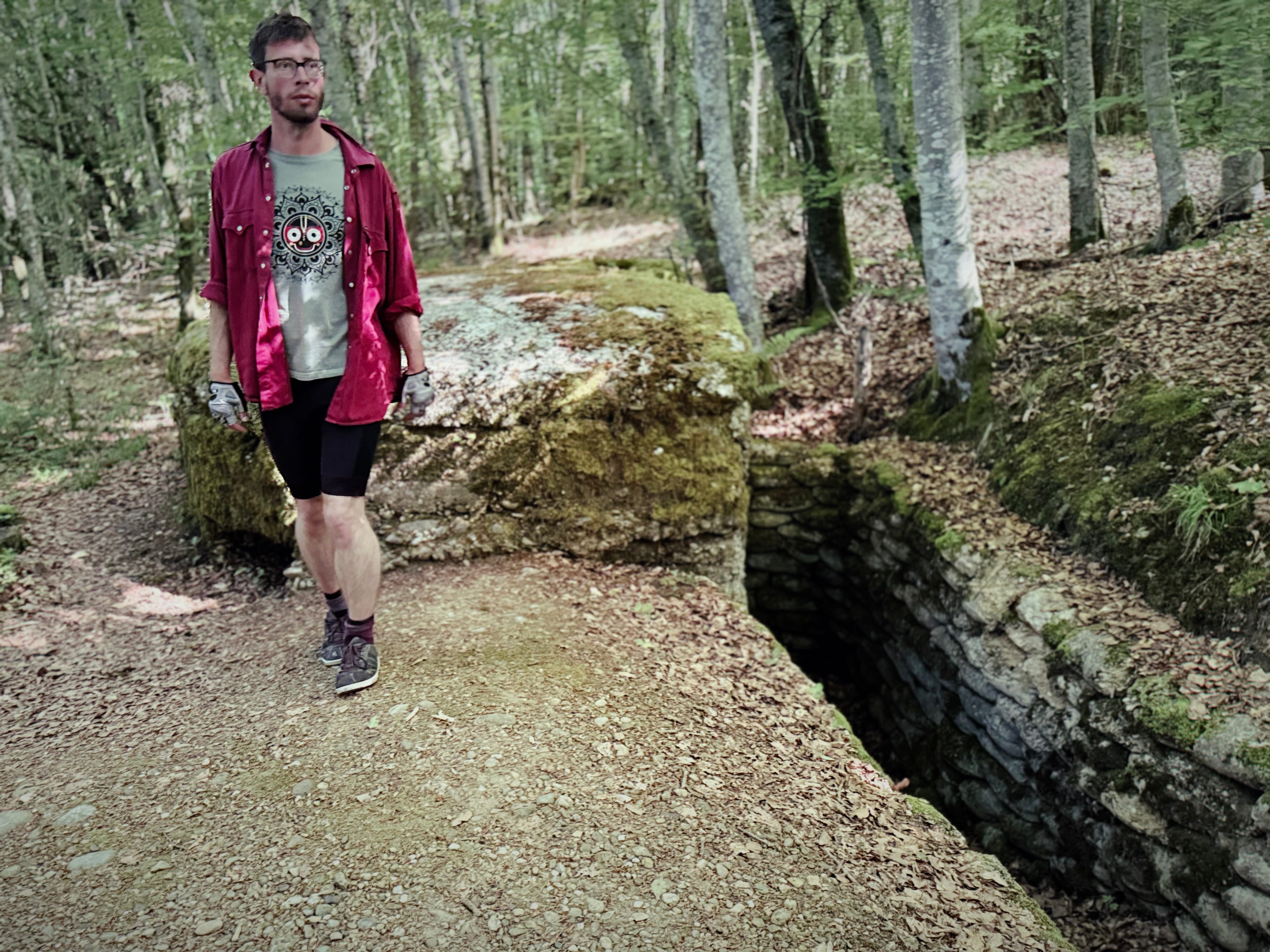
We parked the bikes by a moss-covered German bunker and walked down through the trees. Passing out of the forest, across a wooden bridge over a brook, the pasture opened out before us ablaze with buttercups and spring flowers, a soft warm breeze that barely kissed the grass, and in the distance a farmhouse, the whole scene so perfect it might have been an AI generated postcard.
There was no hint of apocalypse here, save for a watchtower and a plaque. A few black and white photos. A big stone marker. Didn’t look like the gaping asshole of the great war beast - a monstrous, mechanised, industrial murder machine that consumed, digested, incinerated, eviscerated, gassed, dissected, dissolved, and shat out twenty million men in the space of four agonising long years - double that if you include the civilian dead.
I don’t know exactly what I was expecting. Not this wholesome advert for herbal lozenges and pastoral tourism. It looked like the kind of place you lie down for a post-coital nap, not the front porch of Armageddon.
Personally, I felt it needed a statement piece.
Maybe a mile-high tower of skulls wrapped in barbed wire and burning flesh, spitting jets of napalm into the stratosphere while Fokker Triplanes etched WHAT THE FUCK across the blood-red sky in smoke trails, backed by speakers the size of cathedrals blasting the sound of twenty million fingernails clawing at the blackboard of history.
But no - that wouldn’t do it, couldn’t do it, no clichéd heavy metal imagery could express the depth of suffering and grief at the systematic loss of twenty million people full of hopes and dreams and plans and anxieties, who left behind wives, lovers, parents, and children, all turned to dung by the decisions of a few hollow men with fat necks, empty souls and vacuum cleaner eyes.
I need to see twenty million men stood in that field, just to try and get some fucking idea of what it even looks like.
A million British and Commonwealth men died in the Great War. If they stood in line they’d stretch from here to the sea. One thousand kilometres. The exact route we’re about to ride. Every turn of our pedals grinds over three ghosts.
I try and think about that from time to time as I ride, but I just can’t keep up.
Because when we talk about war, we’re still playing with plastic soldiers and cap guns. John Wayne striding through a smoke machine. Glory. Honour. Triumph. Bullshit. Lies. Nobody speaks of the husks that came home. The staring men. The ones who never again touched their wives, who exploded without reason, who couldn’t hold their children without shaking. Who sat for forty years in kitchens with tea gone cold, eyes fixed on something long passed.
“My grandfather fought in the war, but he never spoke about it”.
Of course he didn’t.
It’s unspeakable.
The poets tried, did a pretty good job. Too good, maybe. Their stanzas got hijacked by the same machine that murdered their friends. Romantic verse turned recruiting poster. Their grief fed straight into the canon of noble sacrifice. In bearing witness, they also laid the groundwork for more slaughter. Every classroom that teaches war poetry without rage is just tuning the next generation to the right frequency. More meat for the machine.
I suppose I came here to make sense of all this.
But I’m not that naïve. If I waited to understand what compelled me on this journey, I’d still be at home on the couch. Same is probably true for all those boys who signed up.
They didn’t think it through.
They just went.
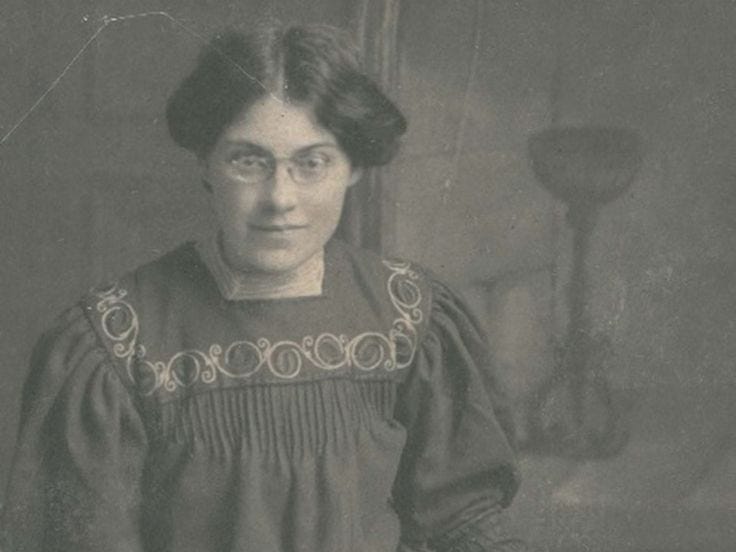
And so, we walk back through the woods to the bikes. I read a piece from As It Was by Helen Thomas. Her final parting from her husband, the poet Edward Thomas. For each of the fourteen days of the journey I’ve selected a piece of prose and a poem. I chose Helen Thomas to begin because I wanted to show the impact of war beyond the soldiers, I wanted to show the impact on those left behind.
It breaks me just as it did when I first read it thirty years ago, the tears running through my beard and dropping onto the paper in my shaking hand.
Then, when we’re done and the silence settles once more, I wipe my eyes, and we begin our ride.
From As It Was by Helen Thomas (1877-1967)
I sit and stare stupidly at his luggage by the wall and his roll of bedding, kitbag, and suitcase. He takes out his prismatic compass and explains it to me, but I cannot see, and when a tear drops on to it he just shuts it up and puts it away. Then he says, as he takes a book out of his pocket, “you see, your Shakespeare's Sonnets is already where it will always be. Shall I read you some?”
He reads one or two to me. His face is grey and his mouth trembles, but his voice is quiet and steady. And soon I slip to the floor and sit between his knees, and while he reads his hand falls over my shoulder and I hold it with mine.
“Shall I undress you by this lovely fire and carry you upstairs in my khaki overcoat?” So he undoes my things, and I slip out of them; then he takes the pins out of my hair, and we laugh at ourselves for behaving as we so often do, like young lovers.
“I'll read to you till the fire burns low, and then we'll go to bed.” Holding the book in one hand and bending over me to get the light of the fire on the book, he puts his other hand over my breast, and I cover his hand with mine, and he reads from Antony and Cleopatra. He cannot see my face, nor I his, but his low, tender voice trembles as he
speaks the words so full for us of poignant meaning. That tremor is my undoing. “Don't read any more. I can't bear it.” All my strength gives way. I hide my face on his knee, and all my tears so long kept back come convulsively. He raises my head and wipes my eyes and kisses them, and wrapping his greatcoat round me carries me to our bed in the great, bare ice-cold room. Soon he is with me, and we lie speechless and trembling in each other's arms. I cannot stop crying. My body is torn with terrible sobs. I am engulfed in this despair like a drowning man by the sea. My mind is incapable of thought. Only now and again, as they say drowning people do, I have visions of things that have been - the room where my son was born; a day, years after, when we were together walking before breakfast by a stream with hands full of bluebells; and in the kitchen of our honeymoon cottage, and I happy in his pride of me.
Edward did not speak except now and then to say some tender word or name and hold me tight to him.
“I’ve always been able to warm you, haven’t I?”
“Yes, your lovely body never feels cold as mine does. How is it that I am so cold when my heart is so full of passion?”
“You must have Myfanwy to sleep with you while I am away. But you must not make my heart cold with your sadness, but keep it warm, for no one else but you has ever found my heart, and for you it was a poor thing after all.”
“No, no, no, your heart's love is all my life. I was nothing before you came and would be nothing without your love.”
So we lay, all night, sometimes talking of our love and all that had been, and of the children, and what had been amiss and what right. We knew the best was that there had never been untruth between us. We knew all of each other, and it was right. So talking and crying and loving each other's arms we fell asleep as the cold reflected light of the snow crept through the frost-covered windows.
Edward got up and made the fire and brought me some tea and then got back into bed, and the children clambered in, too, and we sat in a row sipping our tea. I was not afraid of crying any more. My tears had been shed, my heart was empty, stricken with something that tears would not express or comfort. The gulf had been bridged. Each bore the other's suffering. We concealed nothing, for all was known between us. After breakfast, while he showed me where his account books were and what each was for, I listened calmly, and unbelievingly he kissed me when I said I, too, would keep accounts.
“And here are my poems. I've copied them all out in this book for you, and the last of all is for you. I wrote it last night, but don't read it now. . . It's still freezing. The ground is like iron, and more snow has fallen. The children will come to the station with me; and now I must be off.”
We were alone in my room. He took me in his arms, holding me tightly to him, his face white, his eyes full of a fear I had never seen before. My arms were round his neck.
“Beloved, I love you,” was all I could say.
“Helen, Helen, Helen,” he said, “remember that, whatever happens, all is well between us for ever and ever.” And hand in hand we went downstairs and out to the children, who were playing in the snow.
A thick mist hung everywhere, and there was no sound except, far away in the valley, a train shunting. I stood at the gate watching him go; he turned back to wave until the mist and the hill hid him. I heard his old call coming up to me: “Coo-ee!” he called. “Coo-ee!” I answered, keeping my voice strong to call again. Again through the muffed air came his “Coo-ee!”. And again went my answer like an echo. “Coo-ee!” came fainter next time with the hill between us, but my “Coo-ee!” went out of my lungs strong to pierce to him as he strode away from me. “Coo-ee!” So faint now, it might be only my own call flung back from the thick air and muffing snow. I put my hands up to my mouth to make a trumpet, but no sound came. Panic seized me, and I ran through the mist and the snow to the top of the hill, and stood there a moment dumbly, with straining eyes and ears. There was nothing but the mist and the snow and the silence of death.
Then with leaden feet which stumbled in a sudden darkness that overwhelmed me I groped my way back to the empty house.
i cry and cry and cry